Industrial Solutions

Production equipment and framing for lean manufacturing

We design and build production equipment from modular tube and profile systems – flow racks, assembly fixtures, picking and transport trolleys, and bespoke framing you will not find off the shelf. Built to suit the workstation rather than the catalogue.

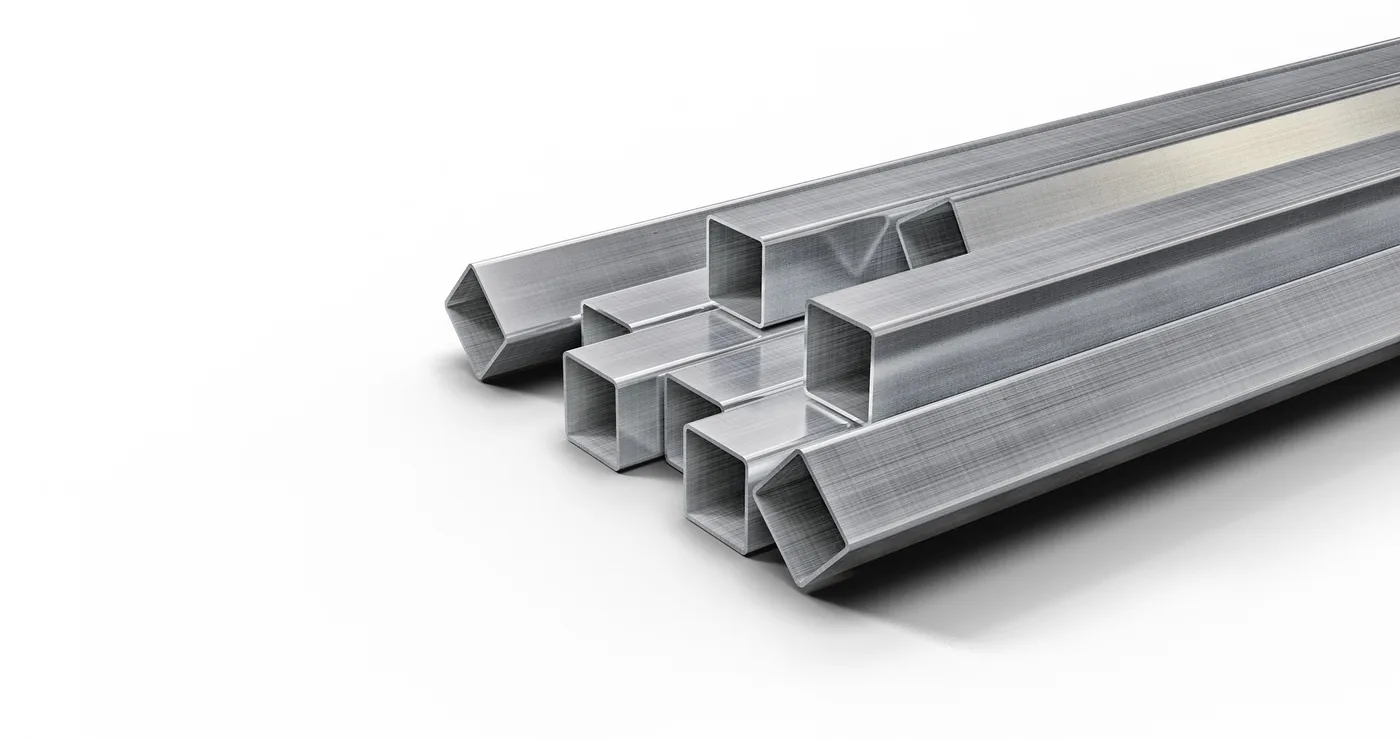
Aluminium square profiles as raw material for equipment framing
Where this comes from

Why an energy consultancy builds shop-floor equipment

The common denominator is the way of thinking: something that was never planned this way, a requirement that has since changed, and the question of which solution is technically sound and economically defensible. In energy consulting that means the building envelope and the plant. On the shop floor it means the workstation, the material flow and the cycle time.

Industrial Solutions is a division of K&S Energy GmbH. Behind it is the same engineering work we otherwise apply to buildings, only directed at production equipment. More about us on the about page.

What we build

Four areas

Every one of these is a one-off, built to your constraints – container dimensions, reach height, cycle time and the floor area available.

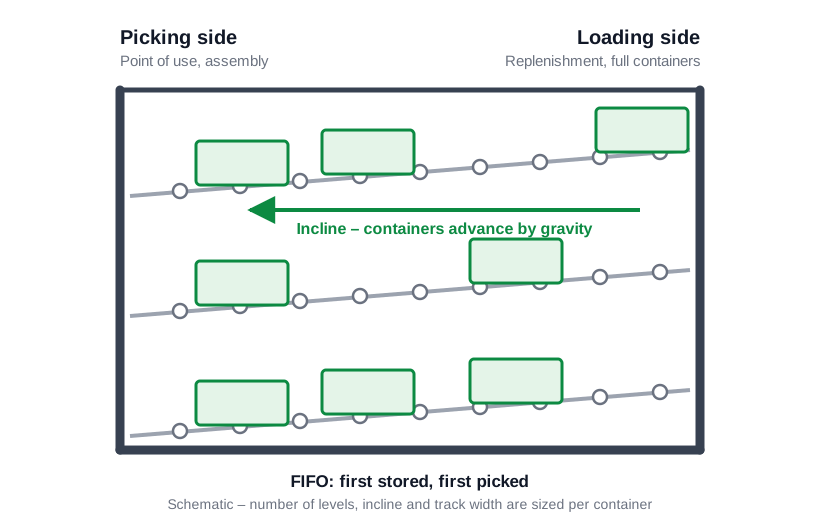
Schematic of a flow rack: containers are loaded at the rear and travel down inclined roller tracks to the picking face

Flow racks

Containers are loaded at the rear and travel forward by gravity on inclined roller tracks. That separates replenishment from picking, enforces first-in-first-out and removes every movement at the workstation that exists only to restack material.

  • Sized to container dimensions, weight and the required buffer depth
  • Incline chosen so that full and empty containers both run reliably
  • Ergonomic picking heights, with an optional return lane for empties
  • As a static rack or as a flow level built into a trolley
Assembly fixture built from aluminium profile at a workstation

Assembly fixtures and jigs

Locators, holders and jigs that admit the part in exactly one orientation. Where the fixture defines the position, alignment disappears – and with it a large share of the errors that would otherwise only surface at inspection.

  • Workpiece locators, positioning aids and clamping devices
  • Welding, bonding and assembly jigs
  • Poka-yoke design: the wrong orientation does not fit
  • Interfaces to existing workstations and table frames
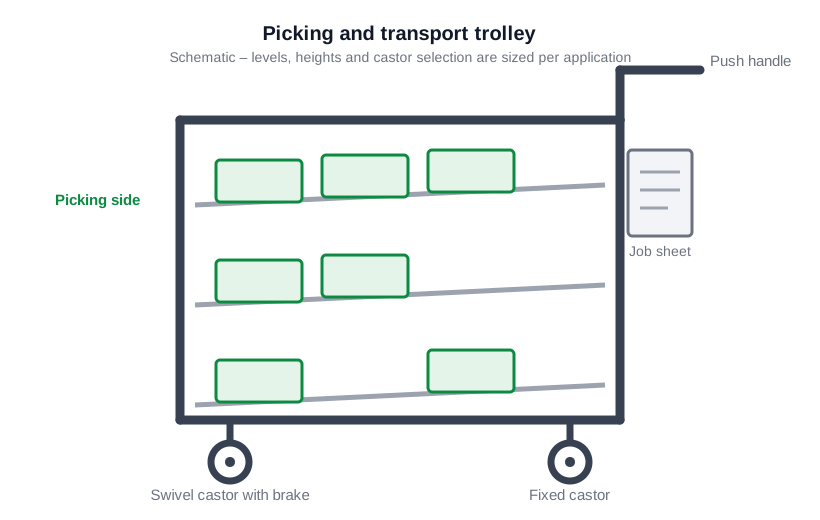
Schematic of a picking and transport trolley with three inclined shelf levels, push handle and castors

Picking and transport trolleys

Trolleys that fit the job rather than the other way round: the right shelf heights, the right containers, the right running characteristics. As a picking trolley, as a tugger train trailer or as a line-side presentation trolley.

  • Fixed or inclined levels, heights set by the operator's reach envelope
  • Swivel and fixed castors matched to floor, load and travel distance
  • Brakes, end stops and holders for job paperwork
  • Trailer version for tugger train operation on request
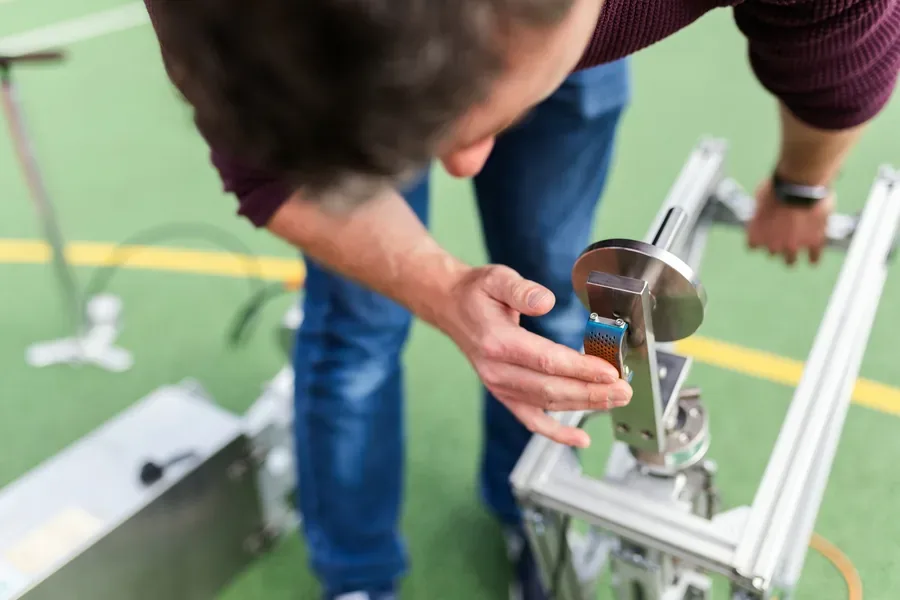
Technical assembly on aluminium profile with mounted components

Bespoke framing

Everything that has no part number: machine enclosures, test rigs, mounts for sensors and displays, transport frames for delicate parts, and modifications to equipment already in service.

  • One-offs and small batches
  • Add-ons to existing machines and frames
  • Transport and storage frames for defined parts
  • Modifying what is already there instead of buying new
System basis

What it is built from

We work with two modular construction methods that have become standard in equipment building. Both are bolted rather than welded, which means they can be altered later, extended, and finally taken apart again.

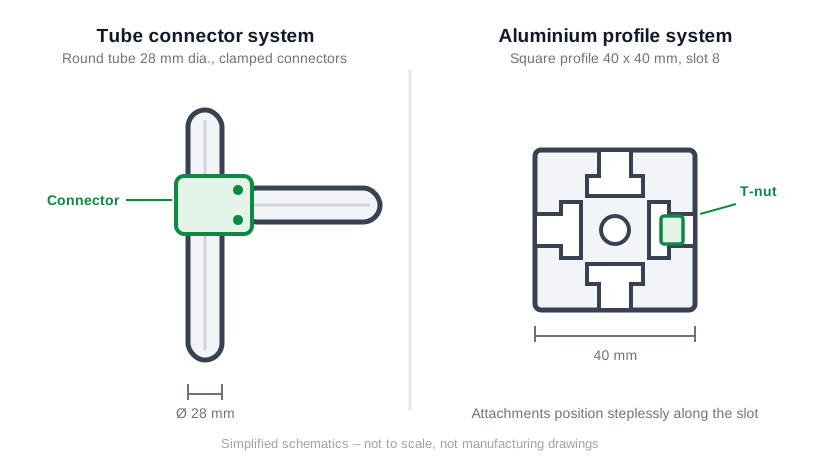
Schematic of the two construction methods: on the left a tube connector system with 28 millimetre round tube and a clamped connector, on the right a 40 by 40 millimetre aluminium square profile with slot 8 and an inserted T-nut

Tube connector system, 28 mm dia.

Round tube in aluminium or coated steel, joined by clamped connectors. Light, quick to build and alterable without special tools. The first choice for racks, trolleys and anything that will still be adjusted once it is in service.

Aluminium profile, 40 x 40 mm, slot 8

Square profile with a slot on every face. Attachments can be positioned steplessly and the structure is stiffer than the tube system. The choice where loads, guides or dimensional accuracy come first.

Supplier-independent: both dimensions are industry standards served by several manufacturers. We do not commit to one supplier but choose by availability, price and what is already in use at your site. Existing structures can usually be reused rather than replaced.

Process

How a project runs

Survey

We look at the workstation: containers, reach paths, cycle time, space, floor. That usually shows whether the real problem is replenishment or presentation.

Design

Sketch and dimensions for sign-off, then the design with a parts list. You see what will be built and what it costs before anything is cut.

Build

Cutting, assembly and function check. Delivered assembled or as pre-assembled modules, depending on what can be transported.

Run-in

After a few weeks in operation it becomes clear what still does not fit. Adjusting is part of the job – which is exactly why we bolt rather than weld.

Who it is for

Where this pays off

  • Production and assembly – when workstations are rearranged and material presentation has to follow.
  • Internal logistics – picking, supermarket, tugger train.
  • Maintenance and in-house equipment building – for the jobs there is currently no internal capacity for.
  • Small and medium batch sizes – where a bespoke build pays off but a full automation project does not.
Stacked round tubes as raw material for equipment framing

A workstation that is not running well?

Describe the situation briefly – the part, the container, the cycle time and what is getting in the way today. A few photographs and dimensions are usually enough for a first assessment.